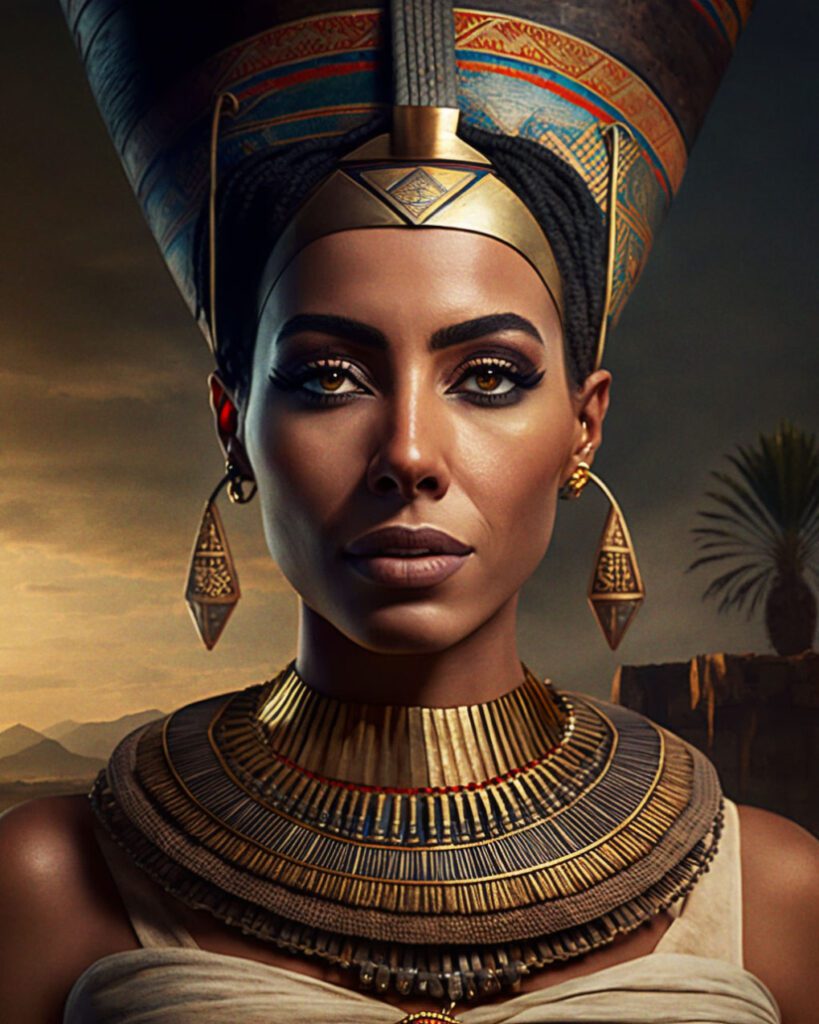
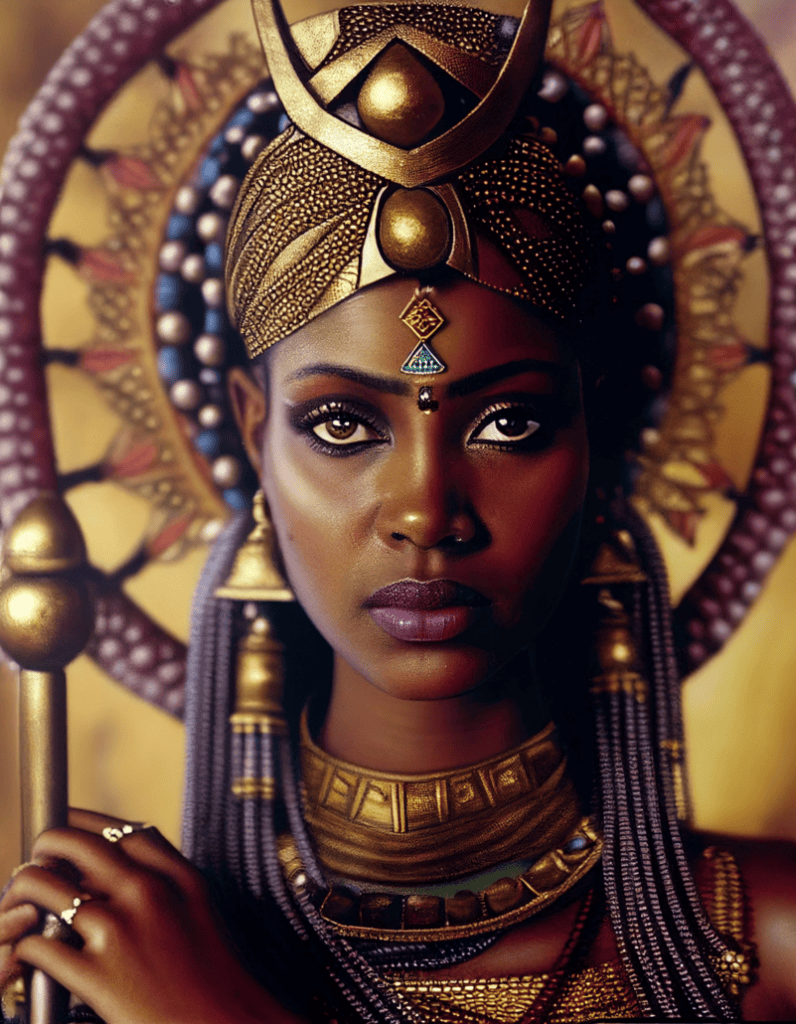
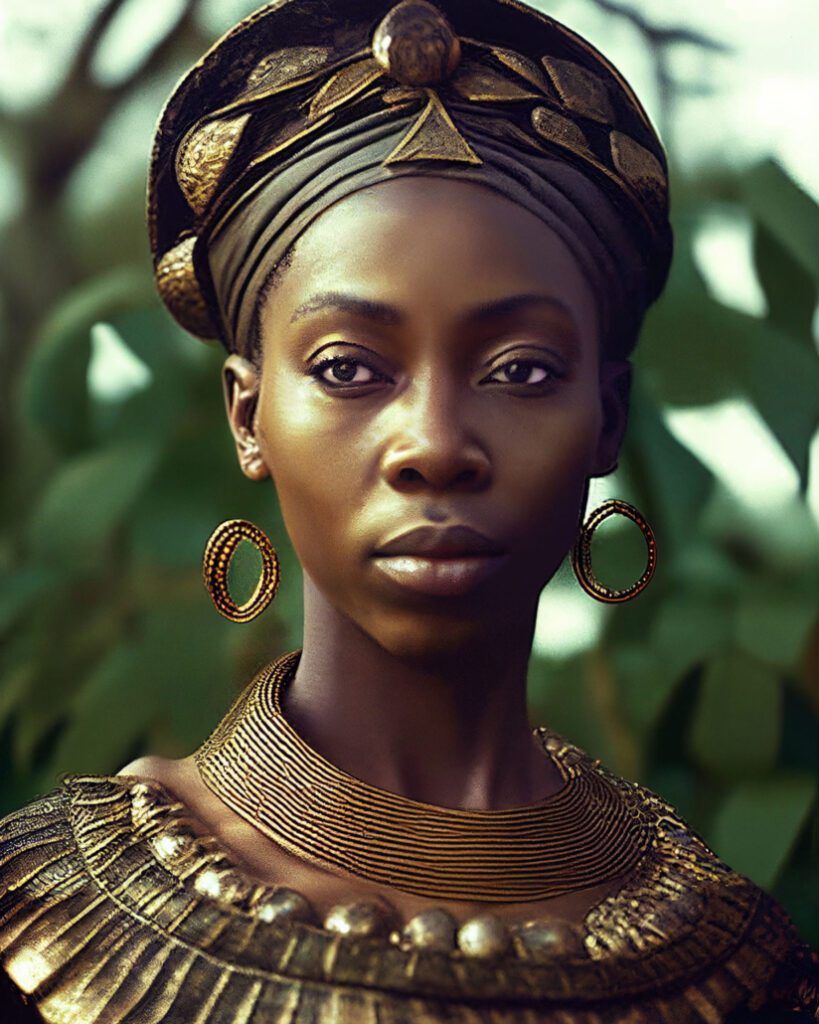
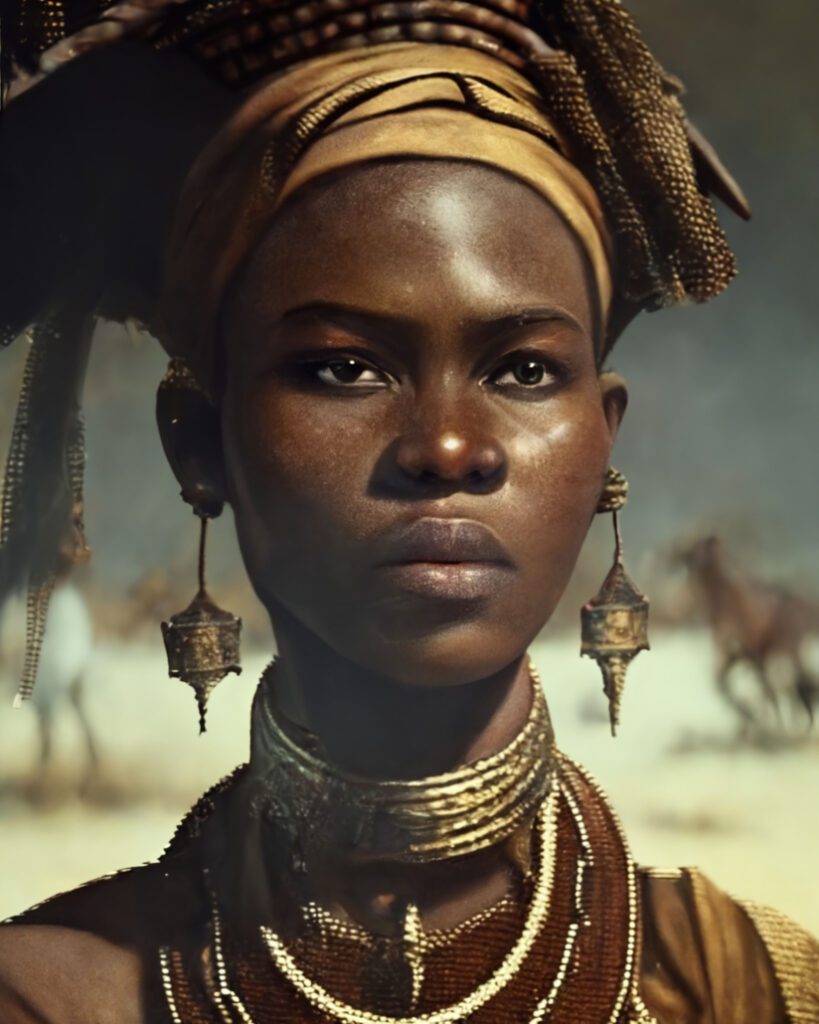
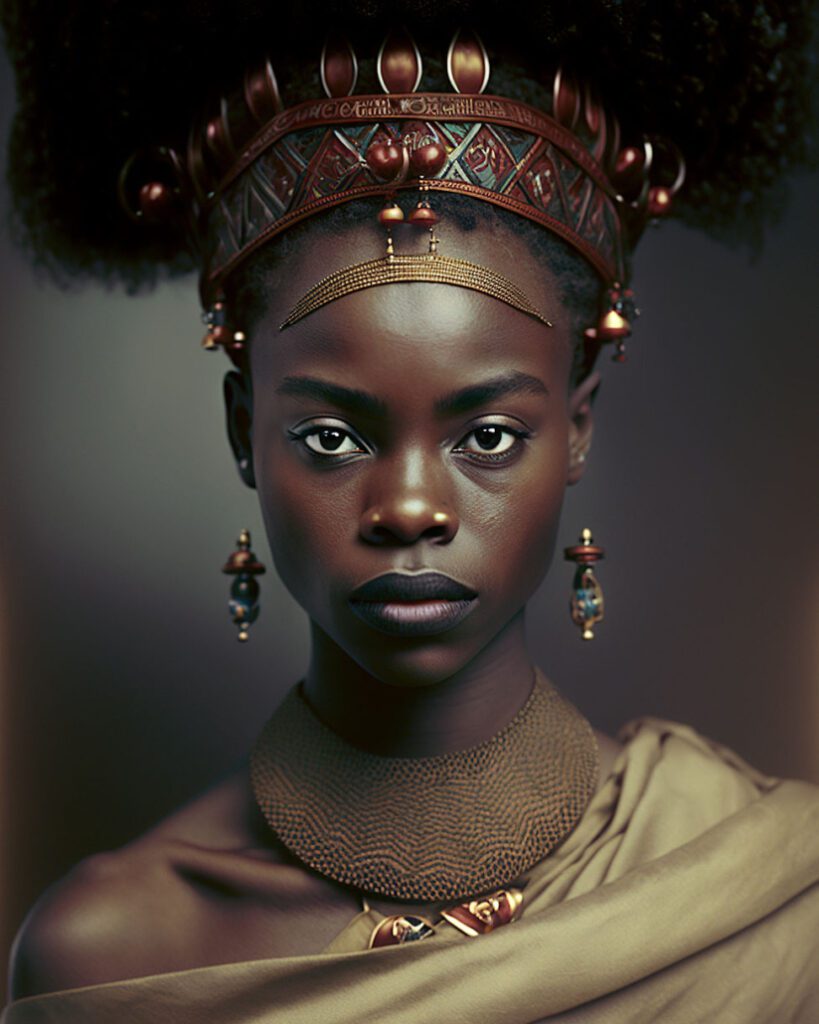
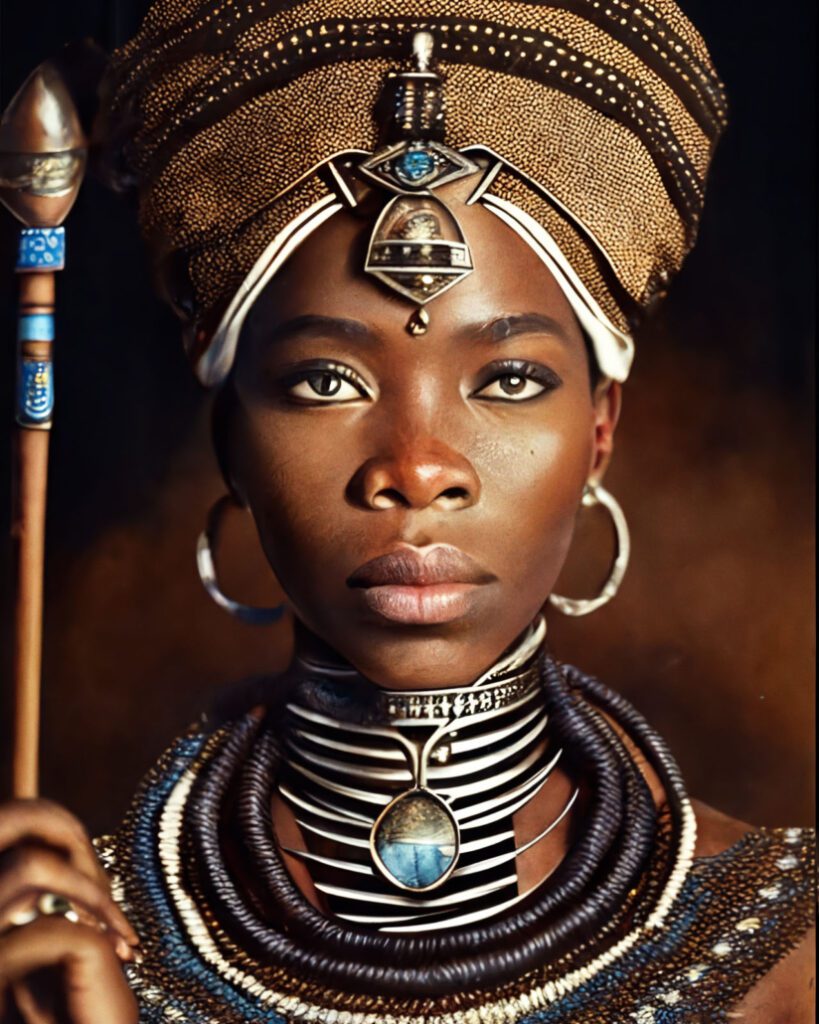
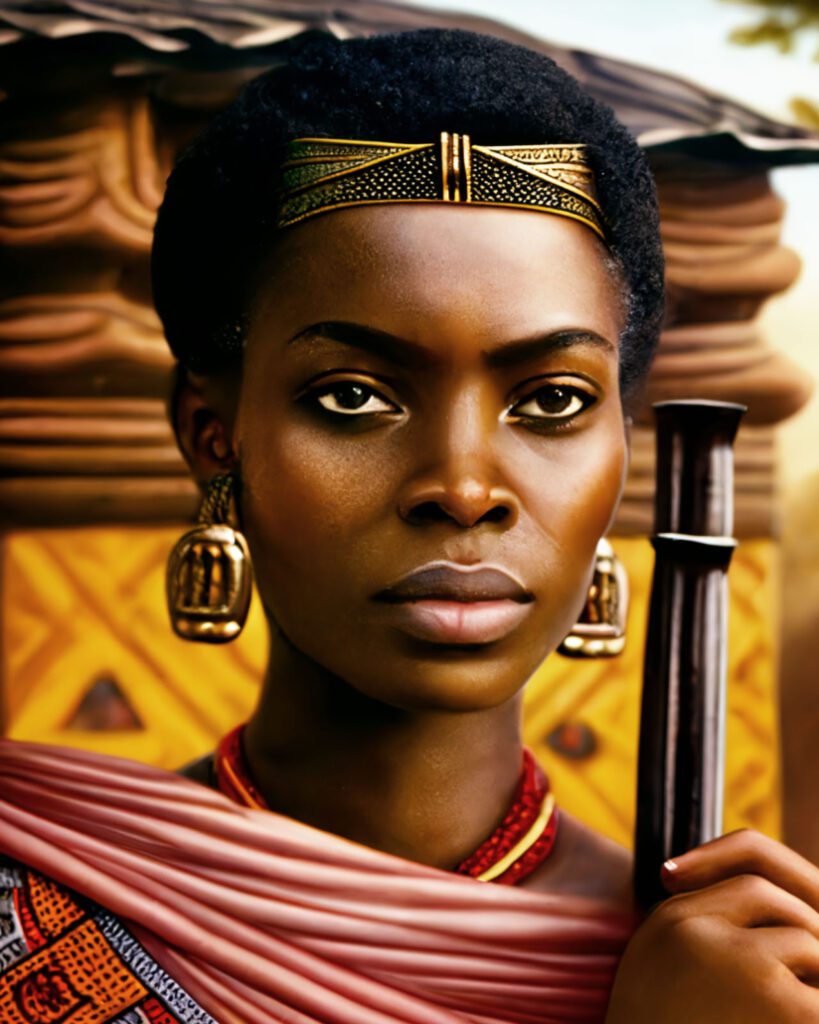
Nefertiti (Egypt), c. 14th century BCE

Great royal wife of Akhenaten, Nefertiti held a central role in the worship of the Aten and was shown performing rituals alongside her husband as an equal. Some historians believe she may have ruled as co-regent, making her one of the Nile Valley’s most powerful women.
Queen Makeda of Sheba (Ethiopia), c. 10th century BCE (legendary)
Ethiopia’s founding mother. In the national epic, the Kebra Nagast, her journey to Solomon and the birth of their son Menelik, the legendary founder of Ethiopia’s royal line, became the foundation of Ethiopian identity for centuries.
Kandake Amanirenas (Kush, present-day Sudan), c. 40–10 BCE
When Rome took Egypt and turned toward Kush, Amanirenas struck first, leading 30,000 troops and capturing three Roman-held cities. The war ended in a negotiated peace, and Kush kept its land and paid Rome no tribute, a rare African victory over the empire.
Moremi Ajasoro (Ile-Ife, Yorubaland), c. 12th century
A Yoruba queen who helped free Ife from raids by the neighbouring Ugbo kingdom by letting herself be captured to learn the enemy’s secrets. The Edi Festival honours her sacrifice, and a statue of her stands in the Ooni’s palace.
Queen Amina of Zazzau (Hausaland, present-day Nigeria), 16th century
A warrior queen who expanded Zazzau through conquests, including Nupe and the Jukun kingdom, and made Kano and Katsina pay tribute. Her earthen walls, still called ganuwar Amina, survive across northern Nigeria.
Queen Nzinga Mbande (Ndongo and Matamba, present-day Angola), c. 1583–1663
A master diplomat and strategist who held off Portuguese forces for decades, leading her troops into battle even in her sixties. The Portuguese never captured her, and she died free.
The Agojie of Dahomey (present-day Benin), c. 1700s–1890s
Called “Amazons” by Europeans, the Agojie were Dahomey’s elite all-woman army, first recorded in 1729 and at their height under King Ghezo. They fought the French invasion of 1892 with a courage their enemies never forgot.
Queen Nanny of the Maroons (Jamaica), c. 1685–c. 1750
Born in Ghana and enslaved in Jamaica, Nanny escaped and led the Maroons of the Blue Mountains in guerrilla war until Britain signed a peace treaty in 1740. She is Jamaica’s only National Heroine, a direct link between Africa and the Caribbean.
Queen Nandi (Zulu Kingdom), c. 1760s–1827
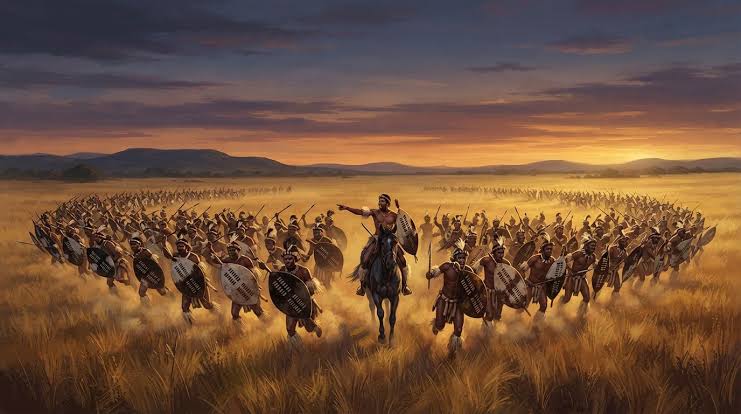
Mother of Shaka, Nandi protected her son through years of exile and hardship. When Shaka took the throne, he made her his queen and closest advisor.
Yaa Asantewaa (Asante, present-day Ghana), c. 1840–1921
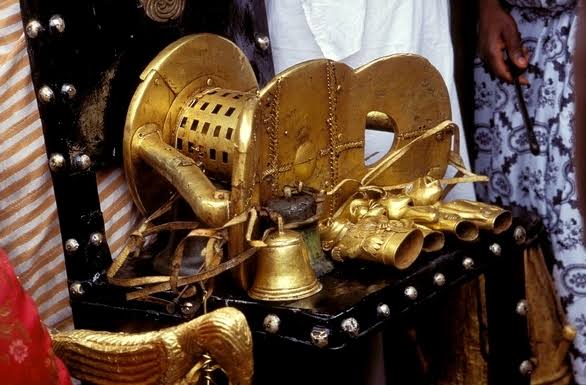
Queen Mother of Ejisu and guardian of the Golden Stool, she led the 1900 war against the British when they demanded the stool. She died in exile, but the Golden Stool was never surrendered.
Empress Zewditu (Ethiopia), 1876–1930
Daughter of Menelik II, Zewditu ruled from 1916 to 1930 as the first and only empress regnant of Ethiopia, guiding Africa’s independent empire through an era of colonial threat.
Empress Menen Asfaw (Ethiopia), 1889–1962
Wife of Haile Selassie and a champion of girls’ education, she founded the Empress Menen School for Girls in 1931, opening modern education to Ethiopian women despite strong opposition.